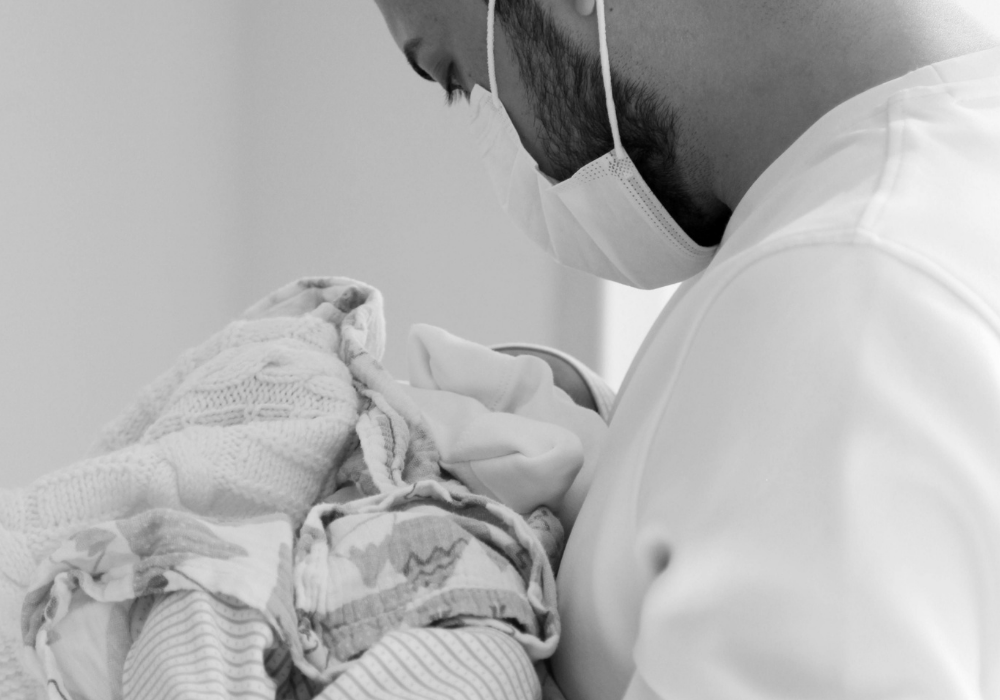
Surrogacy is often spoken about in terms of generosity, hope and family creation. And for many people involved, that is exactly what it is: a deeply considered, carefully supported arrangement that allows a child to be welcomed into a loving family.
But surrogacy also exists within legal, medical and social systems that do not always treat all people equally.
Discrimination in surrogacy can be overt. It can appear in laws that exclude some people from accessing surrogacy because of their sexuality, gender, relationship status or family structure. It can also be subtle: a hospital form that does not fit, a staff member who assumes there must be a mother and father, a surrogate who is treated as naïve or exploited simply because others do not understand her choice, or intended parents who feel they must justify their desire to have a child.
Discrimination can affect:
- surrogates;
- intended parents;
- same-sex couples;
- single intended parents;
- people living with infertility, disability or medical conditions;
- transgender and intersex people;
- children born through surrogacy.
It can show up in the law, in healthcare, in public commentary, in everyday language and in the emotional burden people carry as they move through the surrogacy journey.
At the time of writing in May 2026, surrogacy law reform is actively under national review in Australia. The Australian Law Reform Commission has been asked to examine reforms that protect the rights of children, surrogates and intended parents, address barriers to domestic surrogacy, and consider more consistent laws across the country. Its final report is due to Government by 29 July 2026. Ethical safeguards are not discrimination
Before exploring how discrimination shows up in surrogacy, it is important to draw a clear distinction.
Surrogacy is ethically, emotionally, medically and legally complex. It should involve careful safeguards. Questions about informed consent, exploitation, financial arrangements, the rights of children, the wellbeing of surrogates and appropriate regulation are not only reasonable — they are necessary.
Australia’s human rights framework recognises that surrogacy must consider the rights of children born through surrogacy, surrogate mothers and intended parents, with the best interests of children at the centre. nation arises when people are:
- excluded because of who they are;
- judged through stereotypes rather than assessed fairly;
- made to navigate unnecessary barriers others do not face;
- treated as less legitimate parents, less capable decision-makers or less worthy of respect;
- spoken about in ways that erase their dignity or distort their role.
A well-conducted psychological assessment is not discrimination.
A counselling process that explores readiness, expectations and consent is not discrimination.
A legal safeguard that protects children and surrogates is not discrimination.
But a system that assumes a gay male couple is inherently less deserving of access to surrogacy, or that a surrogate cannot possibly make an informed decision about her own body, moves into discriminatory territory.
1. Discrimination can be written into surrogacy law
One of the clearest ways discrimination shows up is in who is legally allowed to access surrogacy.
Australian surrogacy laws differ between states and territories. This inconsistency has long created confusion and inequity. A 2024 Australian study involving surrogates, intended parents and surrogacy professionals found frustration with the patchwork of state-based laws. Participants specifically described eligibility rules that restricted access for some intended parents — including same-sex couples — as discriminatory. t example is Western Australia. As of May 2026, same-sex male couples and single men are not currently able to access surrogacy in Western Australia, despite the WA Government’s commitment to expanding equity of access to single men, people in same-sex relationships, transgender people and intersex people. d of restriction is not just a bureaucratic inconvenience. It shapes whose desire for parenthood is recognised as legitimate. It can force people to relocate, pursue interstate pathways, consider overseas surrogacy, or abandon the possibility altogether.
Family creation lawyer and surrogacy advocate Sarah Jefford OAM has written extensively about these issues, including the long-standing exclusion of gay couples and single men from surrogacy access in Western Australia and the importance of creating a more equitable national framework. Her article on Western Australia surrogacy law reform is a useful companion piece for readers wanting to understand this area in more depth. 2. Discrimination can appear as unequal scrutiny of who “deserves” to be a parent
Surrogacy arrangements require more formal assessment and scrutiny than many other routes to parenthood. In Australia, this includes counselling, legal advice and, in some jurisdictions and clinical contexts, psychological assessment.
These safeguards can be valuable. They help all parties prepare for a significant and complex relationship. But discrimination can appear when the tone shifts from preparation and protection to suspicion and gatekeeping.
Some intended parents describe feeling as though they must prove they deserve a child in a way others never have to. This can be particularly acute for:
- gay male couples;
- single men;
- single women;
- people who are infertile or unable to carry a pregnancy;
- people with disability or chronic illness;
- transgender or intersex people;
- intended mothers who require a surrogate due to medical reasons.
The discriminatory message may not be spoken directly. It may be conveyed through questions, assumptions or a heightened level of moral scrutiny:
Why are you choosing this?
Why not adopt?
Is your longing for a child valid enough?
Can your family structure really provide what a child needs?
Surrogacy should be carefully assessed. But assessment must be grounded in ethical relevance, not personal bias about which people are entitled to pursue parenthood.
3. Same-sex intended parents may face layered discrimination
For same-sex couples — especially gay male couples — surrogacy can carry the additional weight of homophobia, heteronormative assumptions and public discomfort with families that do not fit a traditional model.
Discrimination may show up in comments such as:
- “A baby needs a mother.”
- “Two dads cannot understand what a child really needs.”
- “Why do gay men need to have biological children?”
- “Surrogacy for gay couples is selfish.”
- “This is about adult desire, not children.”
These statements are often presented as concern for children, but they can rest on deeply stereotyped assumptions about gender and parenting.
Research on gay father families formed through surrogacy does not support the idea that children are disadvantaged simply because they are raised by two fathers. A 2017 study of gay father families created through surrogacy found positive parent–child relationships and good child adjustment, with outcomes shaped far more by the quality of parenting and family relationships than by family structure itself. s not mean every individual family is the same — no family form guarantees wellbeing. But it does challenge discriminatory narratives that treat same-sex parenthood as inherently deficient.
4. Intended parents can be shamed for needing surrogacy
Many intended parents arrive at surrogacy after years of grief, infertility, recurrent pregnancy loss, cancer treatment, hysterectomy, serious medical risk, or the reality that their family structure means they cannot carry a pregnancy themselves.
Yet they may encounter responses such as:
- “Maybe it just wasn’t meant to be.”
- “Why don’t you adopt?”
- “You are using another woman.”
- “You are treating pregnancy like a transaction.”
- “You want a baby at any cost.”
Some critiques of surrogacy are grounded in genuine ethical concern, particularly around commercial exploitation and global inequality. Those concerns deserve careful attention. But discrimination emerges when individual intended parents are reduced to a stereotype — selfish, entitled or morally suspect — without understanding their circumstances, the nature of the arrangement or the safeguards involved.
Research on intended parents’ surrogacy journeys has found that stigma can affect emotional wellbeing and shape how openly people feel able to speak about their path to parenthood. nded parents, this can create a painful double burden: carrying the vulnerability of a long reproductive journey while also bracing for judgment from others.
5. Surrogates can be stereotyped, infantilised or stripped of agency
Discrimination in surrogacy does not only affect intended parents. Surrogates are also frequently subject to stigma.
They may be portrayed as:
- exploited;
- naïve;
- emotionally confused;
- unable to understand the significance of pregnancy;
- “giving away” a baby;
- motivated by attention, validation or poor boundaries;
- victims without agency.
These assumptions can be deeply invalidating. In altruistic surrogacy arrangements, surrogates often make thoughtful, deliberate decisions over a long period of time, usually in the context of known relationships or community connections. They undertake counselling, medical review and legal advice. Their choice may be grounded in empathy, strong values about helping others, positive experiences of pregnancy, or a deeply considered wish to support someone they care about.
A 2024 study of women reflecting on their surrogacy experiences over time found that many continued to view surrogacy positively, while also recognising that it involved significant physical, emotional and relational labour. Importantly, participants described feeling misunderstood by public narratives that assumed surrogates lacked informed agency, and they hoped for a reduction in the ignorance and discrimination they had experienced. tirely possible to care deeply about protecting surrogates from coercion and exploitation without treating them as incapable of autonomous decision-making.
6. Discrimination can show up in hospitals and maternity care
Healthcare settings are one of the places where discrimination in surrogacy can become most visible — and most emotionally painful.
Pregnancy and birth systems are often designed around a standard model: a pregnant patient, usually assumed to be the mother, and a partner, usually assumed to be the other parent. Surrogacy does not fit neatly into that framework.
A surrogacy birth may involve:
- the surrogate as the birthing patient;
- her partner or chosen support person;
- one or two intended parents;
- a baby whose day-to-day caregiving will move to the intended parents after birth;
- medical staff who may or may not have experience with surrogacy.
A 2026 Australian qualitative study of gestational surrogates and intended parents found that birth care was shaped by whether people experienced recognition or misrecognition in hospital settings. Participants described institutional variability, inconsistent inclusion and the added burden of needing to advocate for themselves when systems were not prepared. The authors called for clear guidelines, inclusive language and surrogacy-aware documentation. nation or misrecognition in hospitals may look like:
- staff repeatedly calling the surrogate “Mum” in relation to the baby when the arrangement has been clearly explained;
- intended parents being treated as visitors rather than the baby’s parents-in-waiting;
- one parent in a same-sex couple being treated as more legitimate than the other;
- forms that only allow for “mother” and “father”;
- hospital staff appearing uncomfortable or confused about the family structure;
- intended parents feeling they must repeatedly justify why they are present;
- the surrogate’s own needs being overlooked once the baby is born.
These may seem like small moments to outsiders. But during labour, birth and the immediate postnatal period, language and inclusion carry enormous emotional weight. They shape whether people feel respected, safe and understood at one of the most significant moments of their lives.
7. Legal parentage systems can leave families feeling less recognised
In Australian surrogacy arrangements, the surrogate — and sometimes her partner — is the child’s legal parent at birth. Parentage is then transferred to the intended parents by court order, provided the relevant state or territory requirements have been met. e historical and ethical reasons for this structure, including the protection of consent. However, some intended parents experience the post-birth transfer process as emotionally difficult and legally unsettling. In the 2024 Australian study of surrogacy law reform views, intended parents in particular described the parentage transfer process as an unnecessary and costly bureaucratic step and advocated for reform. not a simple issue, and reform must continue to protect surrogates’ rights and informed consent. But it is important to recognise that systems of legal recognition also carry symbolic meaning. When intended parents are caring for their newborn from birth, but the law does not yet recognise them as parents, some experience that as a period of vulnerability or diminished legitimacy.
The ALRC’s current review is specifically examining legal parentage in surrogacy, including how parentage should be recognised in domestic and overseas arrangements. 8. Children born through surrogacy can be affected by stigma too
Children born through surrogacy should never be made to carry adults’ discomfort about how they came into the world.
Discrimination toward children may show up when:
- their family is described as less real or less legitimate;
- people ask invasive questions about who their “real” mother or father is;
- school, sport, healthcare or community forms do not fit their family;
- their conception story is treated as scandalous or suspect;
- political debate about surrogacy becomes dehumanising and forgets that children may hear it.
The Australian Government identifies several human rights relevant to children born through surrogacy, including rights to identity, family relationships, non-discrimination, safety and having their best interests considered as a primary concern. deserve truthful, developmentally appropriate information about their origins. They also deserve to grow up without their existence being framed as morally questionable.
9. Discrimination often hides inside everyday language
Language is one of the most powerful places discrimination appears.
In surrogacy, careless or loaded language can erase people’s roles and dignity. Examples include:
- calling the surrogate “the real mother”;
- referring to intended parents as “the people taking the baby”;
- describing surrogacy as “renting a womb”;
- implying that a woman who cannot carry a pregnancy is less of a mother;
- suggesting that gay fathers have “bought” or “taken” a baby;
- describing a surrogate as “giving up” a baby rather than carrying a baby for the intended parents;
- asking children, “Where’s your actual mum?”
Words shape meaning. They influence how others understand surrogacy, how children understand their story, and how adults feel about their place in the arrangement.
Respectful language does not require pretending surrogacy is simple. It means choosing words that are accurate, human and non-stigmatising.
10. Discrimination can be subtle: not hostile, just exhausting
Not all discrimination is loud. Sometimes it shows up as the cumulative burden of always having to explain.
- Explaining that both men are the baby’s fathers.
- Explaining that the intended mother is no less a mother because she did not carry the pregnancy.
- Explaining that the surrogate is not confused about whose baby she is carrying.
- Explaining why the arrangement is not commercial exploitation.
- Explaining why the child’s family is secure and loving.
This repeated explanatory labour can be emotionally draining. It can make people cautious about disclosure, reluctant to seek support or more anxious in settings where they should feel welcomed.
Discrimination is not only about one offensive statement. It is also about living in systems that continually assume your story is unusual, suspect or in need of justification.
What helps reduce discrimination in surrogacy?
Reducing discrimination requires more than asking individuals to be resilient. It calls for changes in systems, professional practice and public understanding.
1. More consistent and equitable laws
Australia’s current national surrogacy review is an important opportunity to address state-based inconsistencies, discriminatory eligibility rules and parentage pathways that may not adequately reflect contemporary family formation. urrogacy-aware healthcare
Hospitals, fertility clinics and maternity services need clear protocols, inclusive documentation, role clarity and staff education so that surrogates, intended parents and babies are treated with dignity. espectful, evidence-informed public conversations
Surrogacy deserves ethical scrutiny, but it should not be discussed through sensationalism or stereotype. Public debate should distinguish between different legal contexts, acknowledge the rights of all parties and avoid dehumanising surrogates, intended parents or children.
4. Recognition of surrogate agency
Protecting surrogates does not mean dismissing their decision-making capacity. Good practice respects both autonomy and the need for informed, supported consent. upport for intended parents facing stigma
Counselling and professional support can help intended parents process not only the emotional demands of surrogacy itself, but also the impact of judgment, invisibility or discrimination encountered along the way. Further reading: Sarah Jefford on surrogacy law and reform
For readers wanting to explore the legal and advocacy context further, Sarah Jefford OAM has written extensively on Australian surrogacy, donor conception and law reform.
Particularly relevant reading includes:
- Sarah Jefford’s Surrogacy Blog
- Western Australia Surrogacy Law Reform
- A Vision for Surrogacy in Australia
These articles provide valuable context on discriminatory access barriers, the need for national reform and the importance of keeping the rights of children, surrogates and intended parents at the centre of surrogacy policy. Surrogacy should be guided by ethics, not stereotypes
Surrogacy is complex. It should never be approached casually, and it should always involve careful preparation, independent advice, informed consent and a strong focus on the wellbeing of children, surrogates and intended parents.
But complexity should not become a cover for discrimination.
Surrogates should not be reduced to helpless victims or treated as though they cannot make meaningful decisions about their own bodies.
Intended parents should not be shamed for needing surrogacy to build their family.
Same-sex couples, single people, transgender and intersex people should not have to push through prejudice to access care and legal recognition.
Children born through surrogacy should not inherit stigma from adults’ discomfort with family diversity.
Discrimination in surrogacy is not always obvious. Sometimes it is written into the law. Sometimes it appears in a hospital corridor, a form, a headline, a careless question or a judgment made before anyone has listened.
Recognising it matters — because surrogacy is not only about making families possible. It is also about ensuring those families, and the people who help create them, are treated with dignity.
FAQs: Discrimination in Surrogacy
What does discrimination in surrogacy mean?
Discrimination in surrogacy refers to unequal, exclusionary or prejudicial treatment of surrogates, intended parents or children born through surrogacy based on factors such as sexuality, gender identity, relationship status, disability, infertility, family structure or the use of surrogacy itself.
Can surrogacy laws be discriminatory?
Yes. Laws can become discriminatory where they exclude certain people from accessing surrogacy based on characteristics such as sexual orientation, gender or relationship status rather than ethically relevant considerations. As of May 2026, same-sex male couples and single men are not currently able to access surrogacy in Western Australia. does discrimination show up in hospitals?
It may appear through inaccurate language, failure to recognise intended parents’ roles, forms that do not fit the family, assumptions about “mother” and “father,” or staff confusion about the roles of the surrogate, intended parents and baby. surrogates discriminated against too?
Yes. Surrogates may be stereotyped as exploited, naïve or emotionally confused, even where they have made a thoughtful, well-supported and autonomous decision. Research has found that some surrogates feel misunderstood and wish for less ignorance and discrimination in how surrogacy is discussed. does discrimination matter for children born through surrogacy?
Children born through surrogacy have rights to identity, family relationships, safety and non-discrimination. They should not be disadvantaged or stigmatised because of the way their family was formed. Suggested call to action
Navigating surrogacy with care and clarity?
Happy Minds Psychology provides experienced surrogacy counselling and psychological assessments for intended parents, surrogates and known surrogacy teams. We support thoughtful, ethically grounded conversations about expectations, relationships, decision-making, birth planning and the emotional complexity of the surrogacy journey.
References and further reading
Australian Law Reform Commission. (2024–2026). Review of Surrogacy Laws. an Government. (n.d.). Human rights and surrogacy. Surrogacy in Australia. an Government. (n.d.). Recognition of parentage in Australia. Surrogacy in Australia. J., Ng, L., Kendal, E., Qiu, Y., Ojabo, M., Jefford, S., & Peters, M. D. J. (2026). Intrapartum experiences of gestational surrogates and intended parents in Australia: A qualitative study. Women and Birth, 39, 102154. , S., Blake, L., Slutsky, J., Raffanello, E., Roman, G. D., & Ehrhardt, A. (2017). Parenting and the adjustment of children born to gay fathers through surrogacy. Child Development, 89(4), 1223–1233. A. (2026). Surrogacy. Government of Western Australia Department of Health. S. (2026). The Surrogacy Blog. S. (2026). Western Australia Surrogacy Law Reform. S. (2026). A Vision for Surrogacy in Australia. , E., Beilby, K., & Hammarberg, K. (2024). Surrogates’, intended parents’, and professionals’ perspectives on ways to improve access to surrogacy in Australia. International Journal of Law, Policy and the Family, 38(1), ebae009. , Ergler, C., & Hohmann-Marriott, B. (2022). The other side of the story: Intended parents’ surrogacy journeys, stigma and relational reproductive justice. Health & Place, 74, 102769. , Jadva, V., Imrie, S., & colleagues. (2024). “It’s all settled on the right page”: Surrogates’ feelings and reflections on their experiences of surrogacy over time. Human Reproduction, 39(12), 2734–2745.